Brand guidelines and style guides
Give everyone who works on your brand a clear reference for using it. We turn your identity into practical rules and examples, so a designer laying out a campaign, a partner adding your logo to an announcement and a printer preparing artwork can each find the answer they need.
One guide, three people looking for different answers
What the work covers
Which logo goes where?
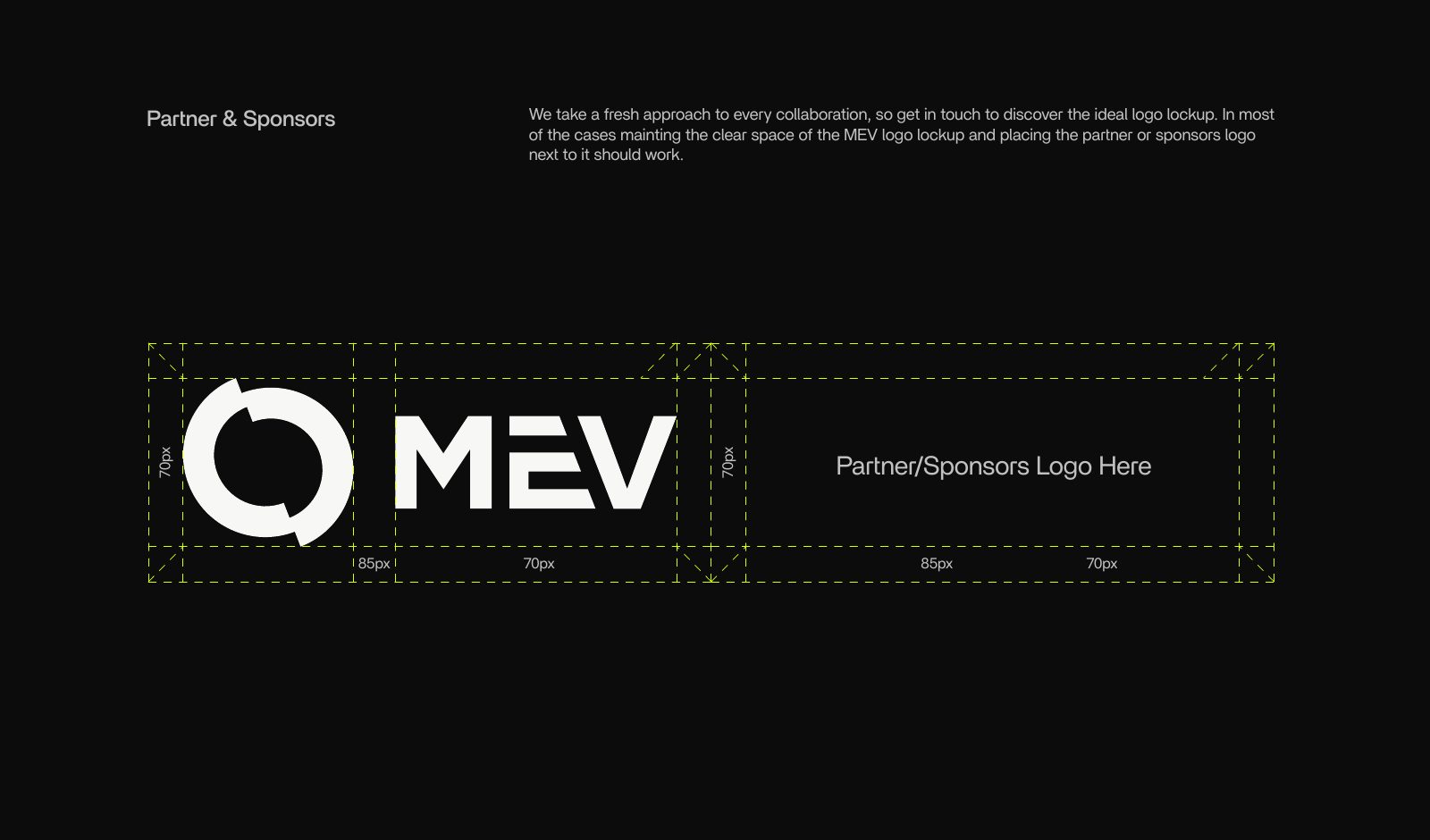
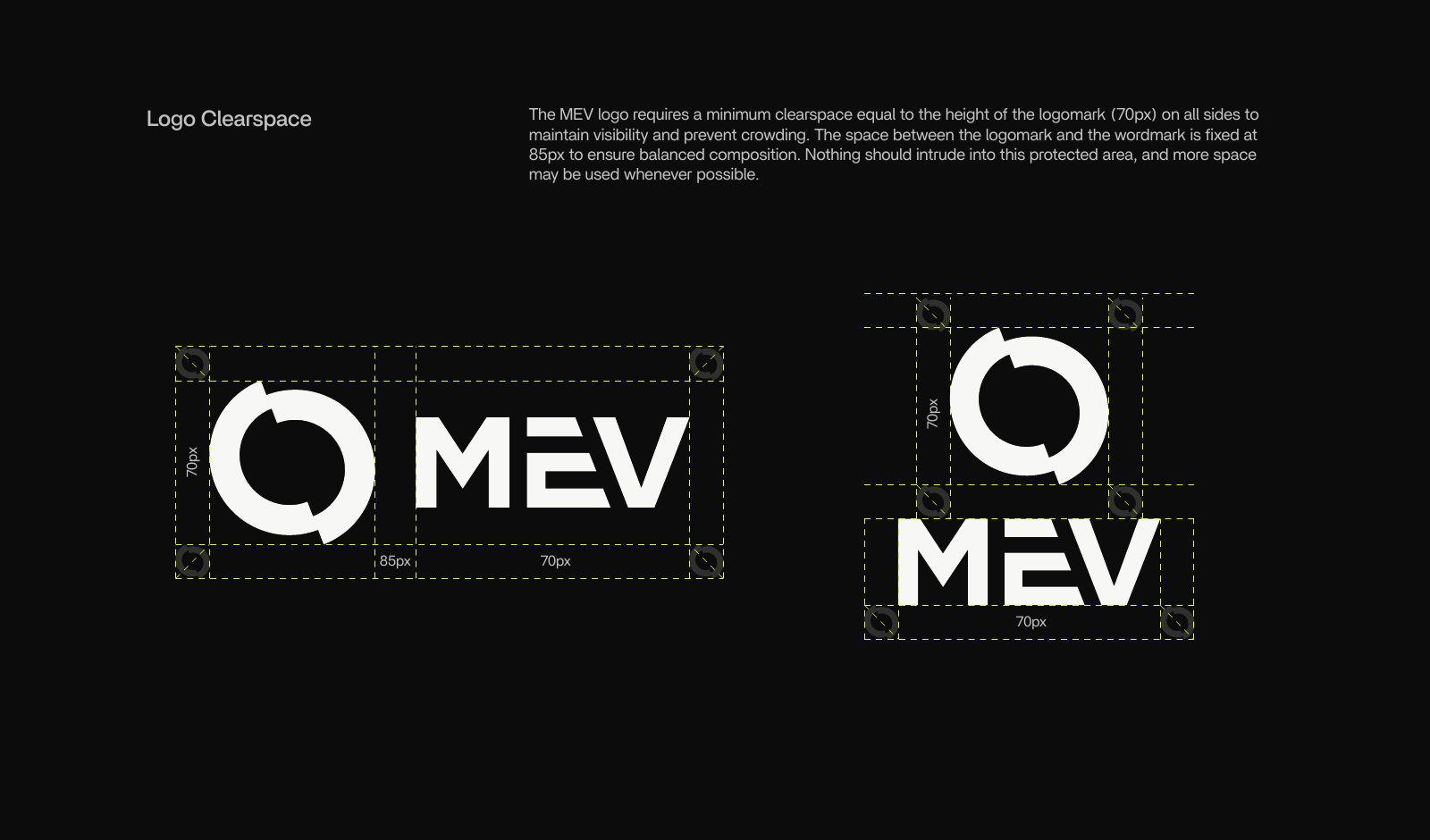
A logo folder can hold a dozen files and still leave someone guessing. We show when to use the full name, when the symbol can stand alone, how much space to leave around it and how to place it beside a partner’s mark. Each rule sits alongside an example of the decision it helps someone make.
How should a page, post or presentation look?
A palette tells a designer which colours belong to the brand. It takes another decision to know which colour should fill a page and which should appear only as an accent. We show those relationships in layouts, alongside type sizes, image treatments and spacing. Where a brand works in English and Bangla, we show how both scripts fit the design.
What makes this particular brand recognisable?
Some brands have a character people know by name. Others have a pattern, a photographic style or a distinctive way of marking a product. We document those details as carefully as the logo. Where the brief includes brand voice, we also show how to write for different audiences, with examples your team can adapt.
How does it work in the places customers see it?
We build examples around the work your team actually makes. That might be a co-branded school announcement, a café menu or a mark on the back of a vehicle. A useful example settles a recurring decision and gives the next person something to work from.

Five brands, five decisions their guides answer
How do we appear alongside an education partner?
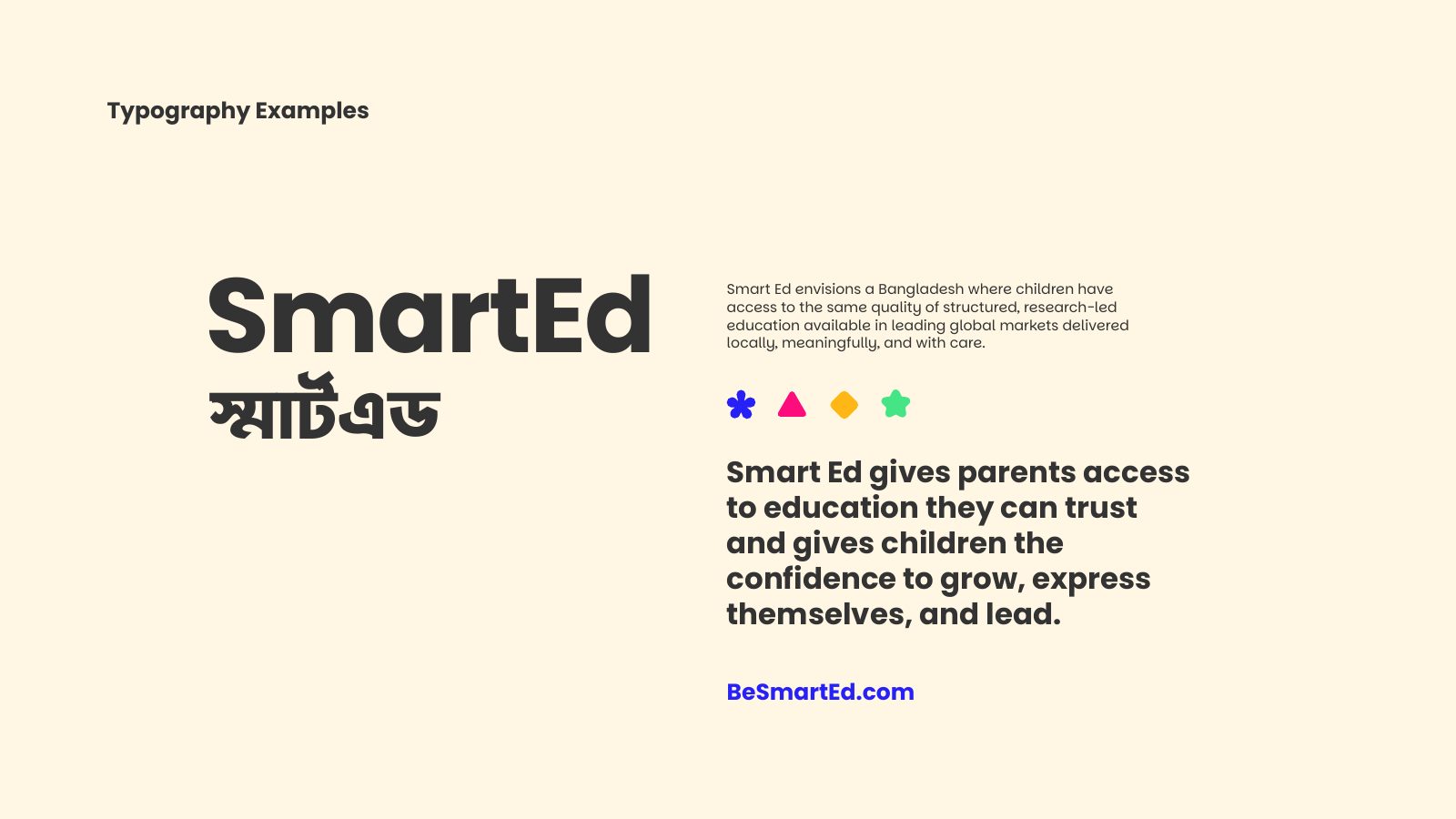
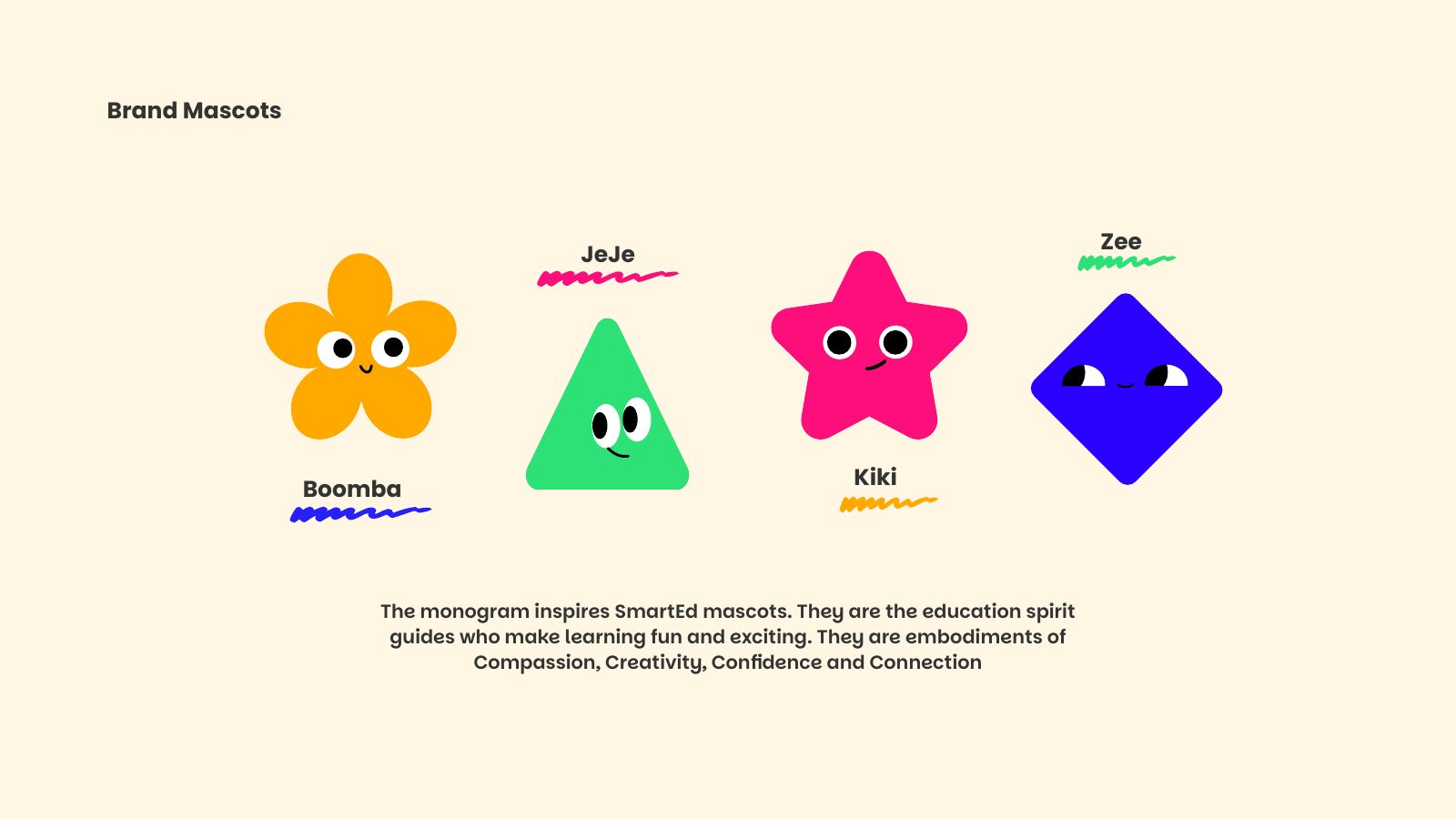
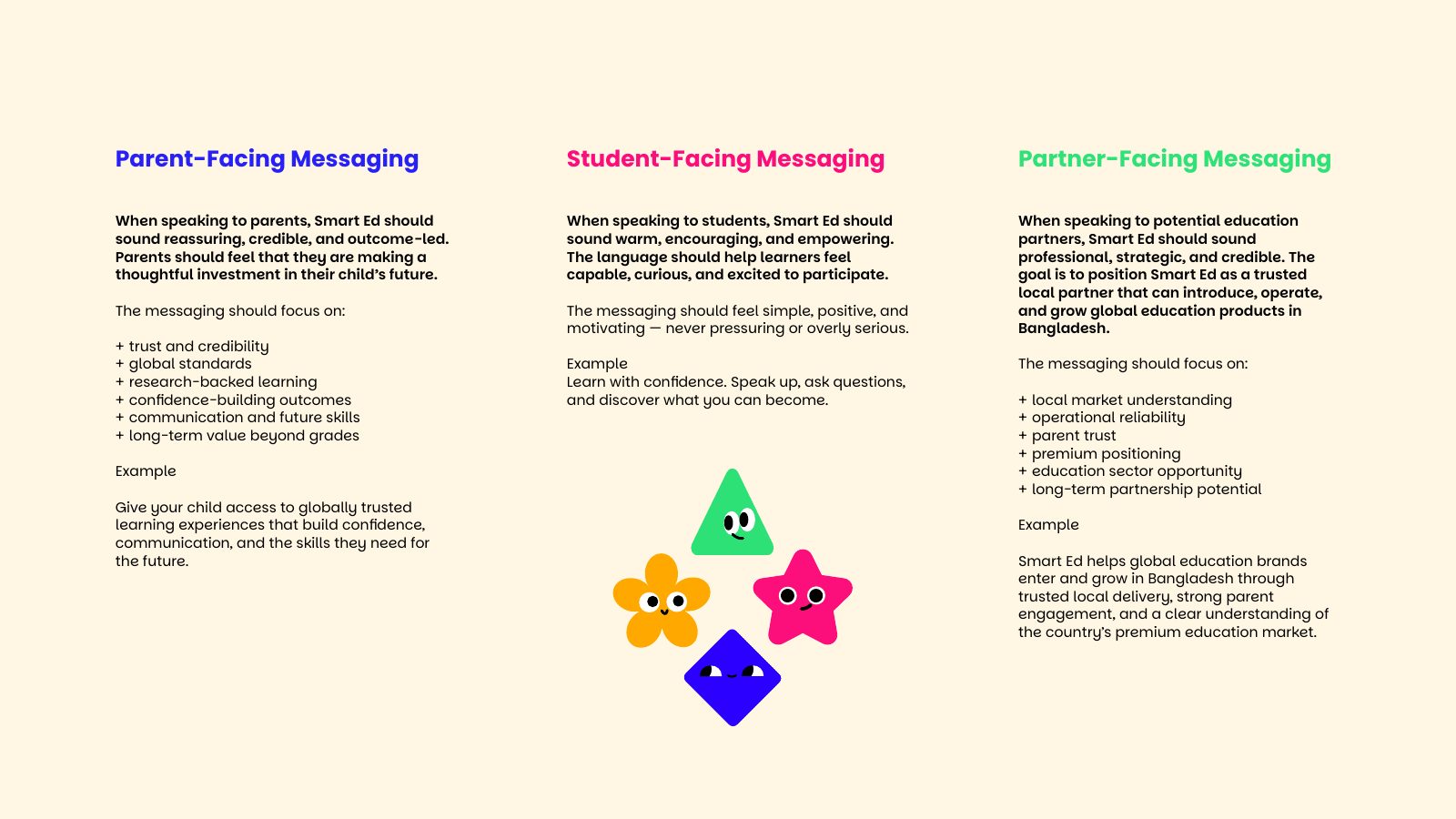
SmartEd’s guide shows how its identity sits beside I Can Read, giving designers a reference for the size and placement of both marks. It also specifies Bengali typography, introduces the four mascots and gives separate messaging guidance for parents, students and partners. A designer preparing a partner announcement and a writer speaking to parents can use the same book for different jobs.
Explore SmartEd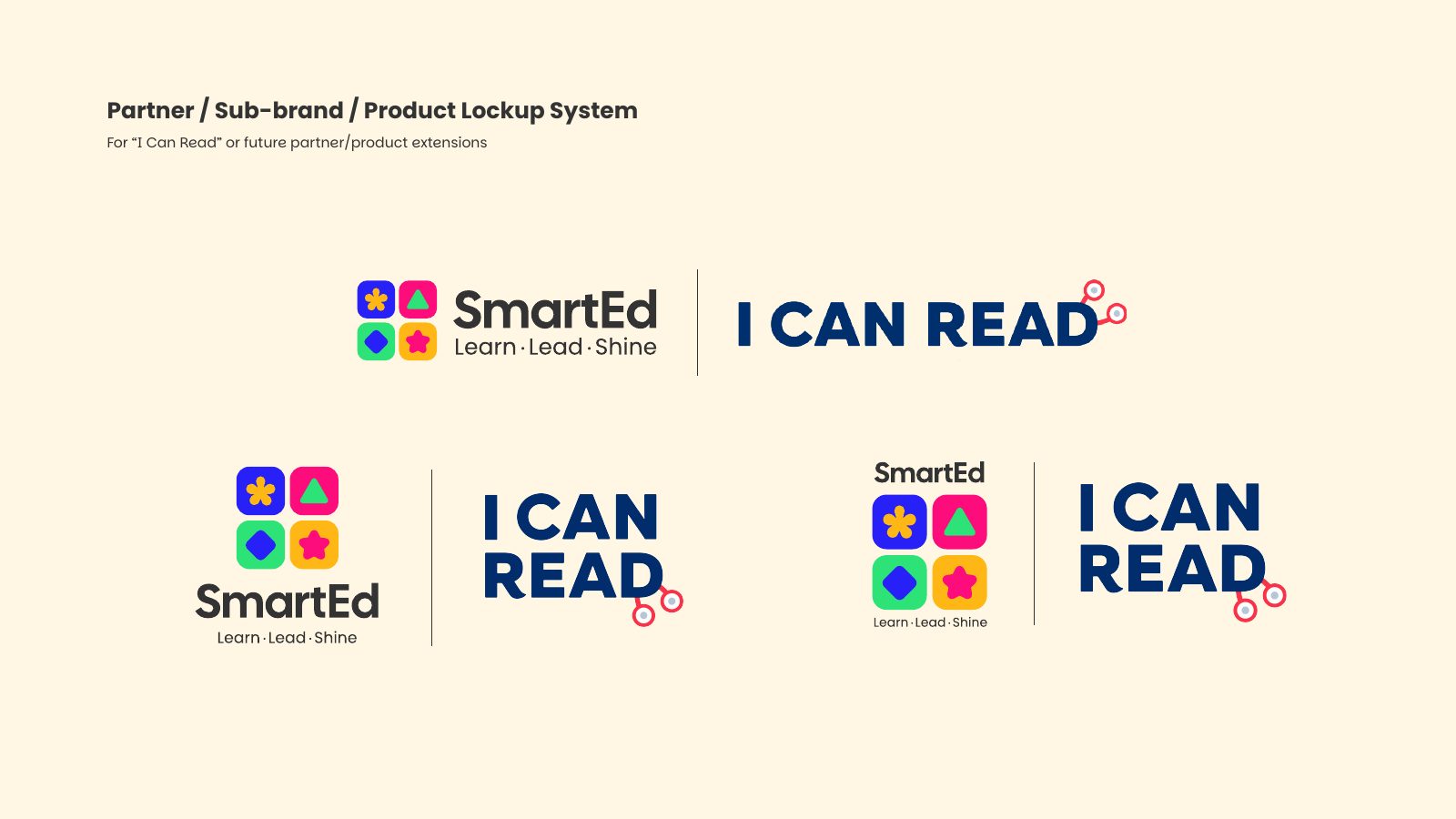
What belongs on the back of a vehicle?
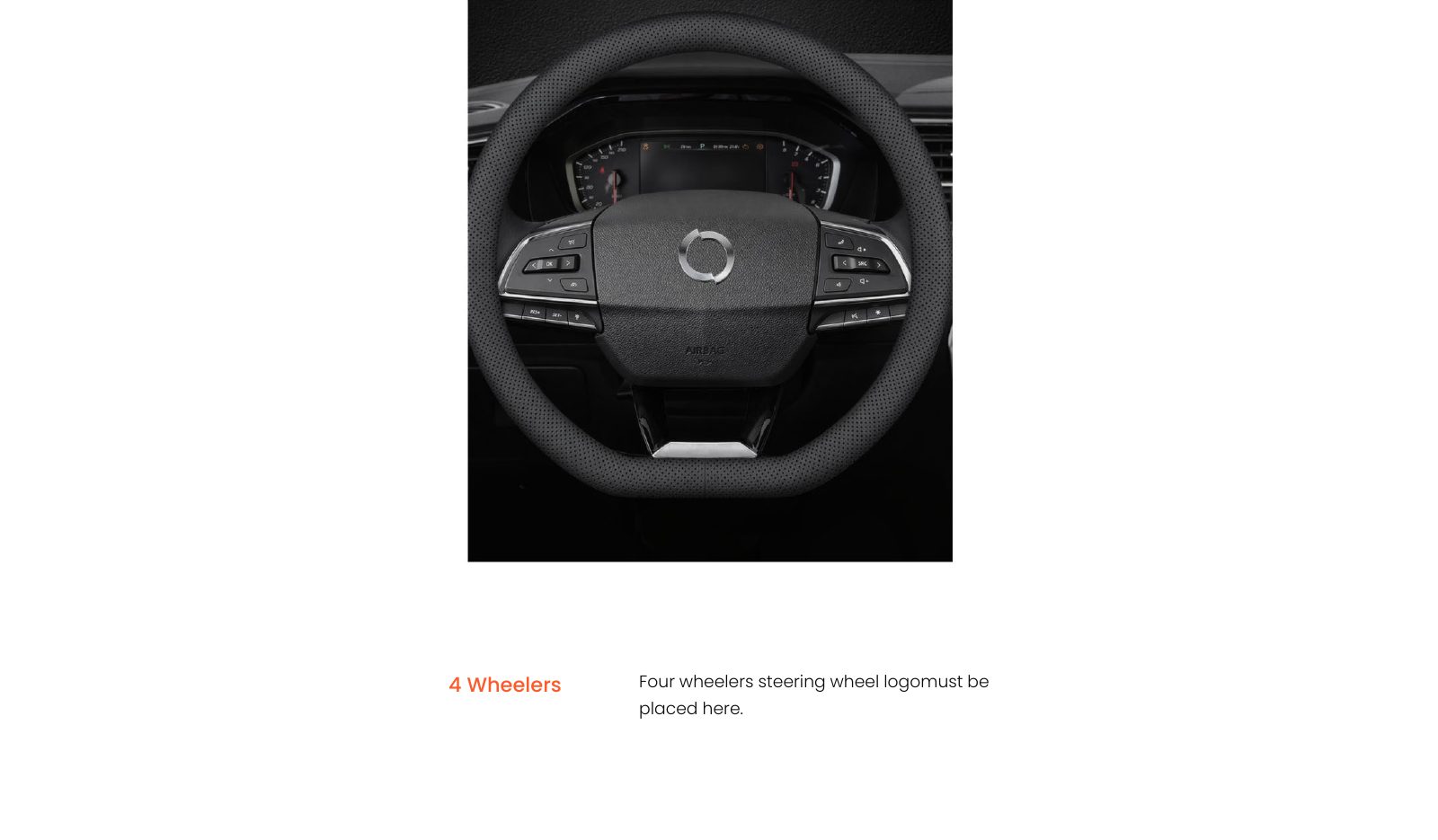
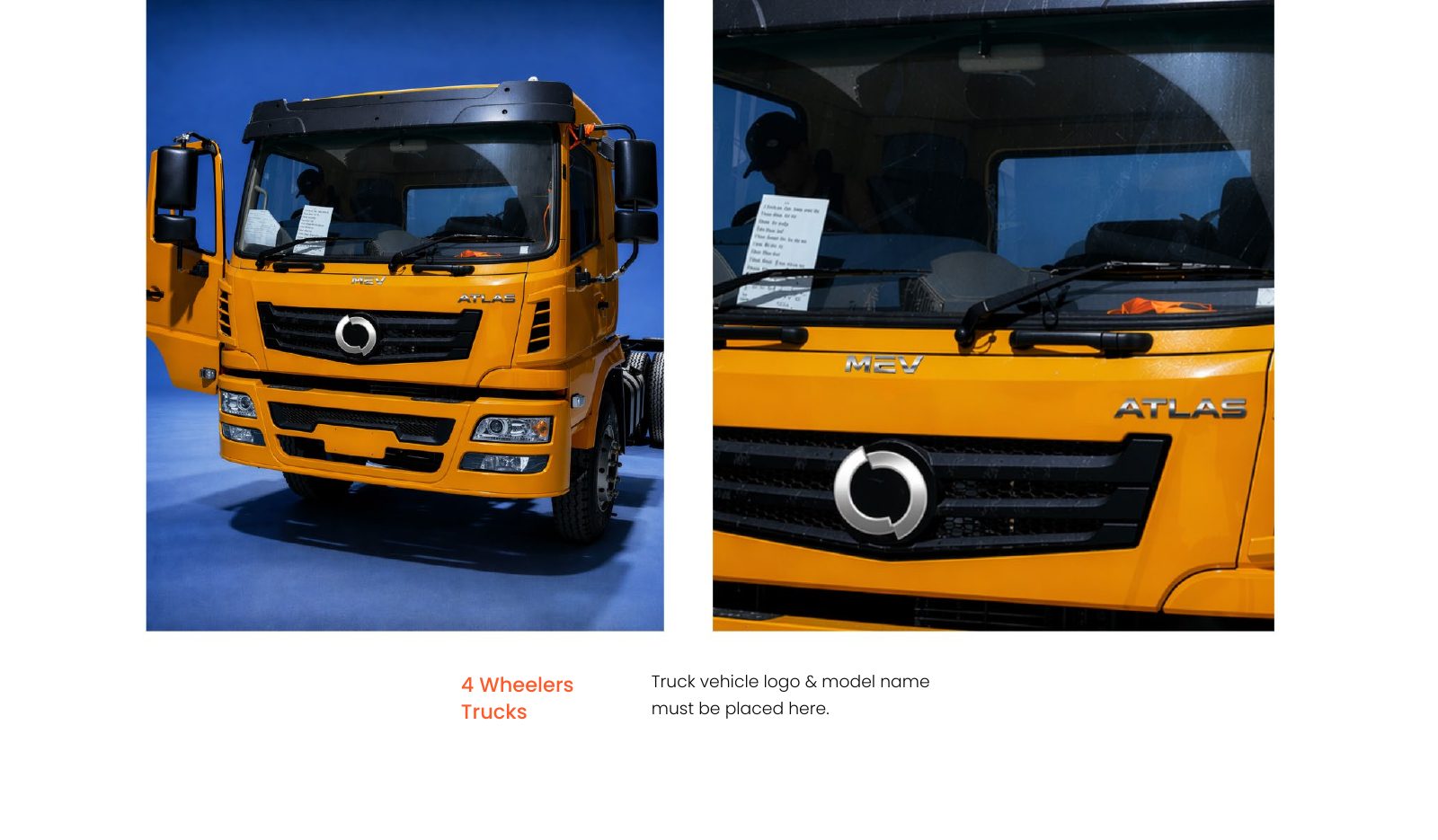
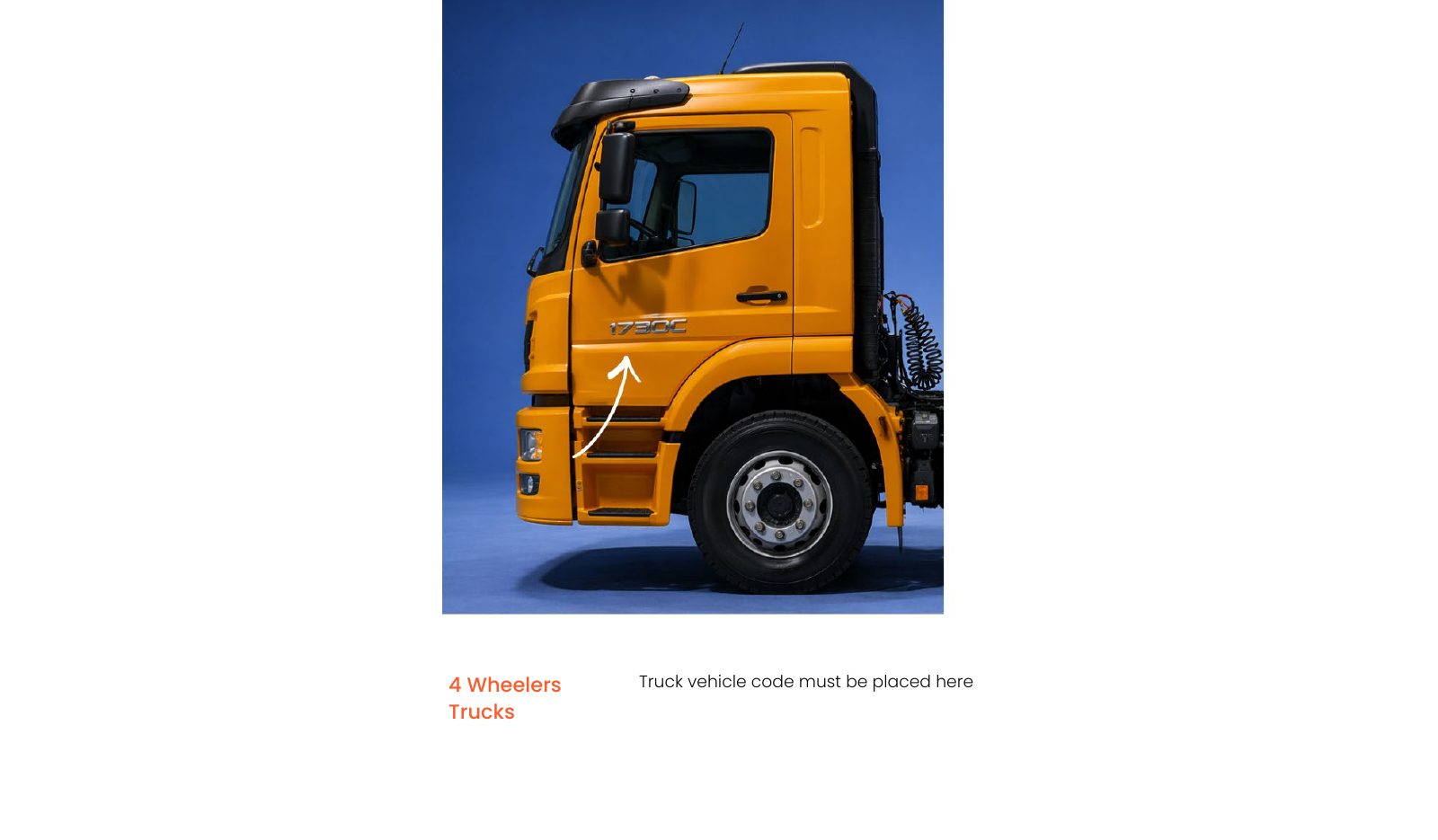
The MEV brand book follows the identity onto the vehicle itself. It shows where the rear brand mark and model name sit, how the emblem appears on the steering wheel and where a vehicle code belongs on a truck. Seeing the marks in position answers a question a page of logo files leaves open.
Explore MEV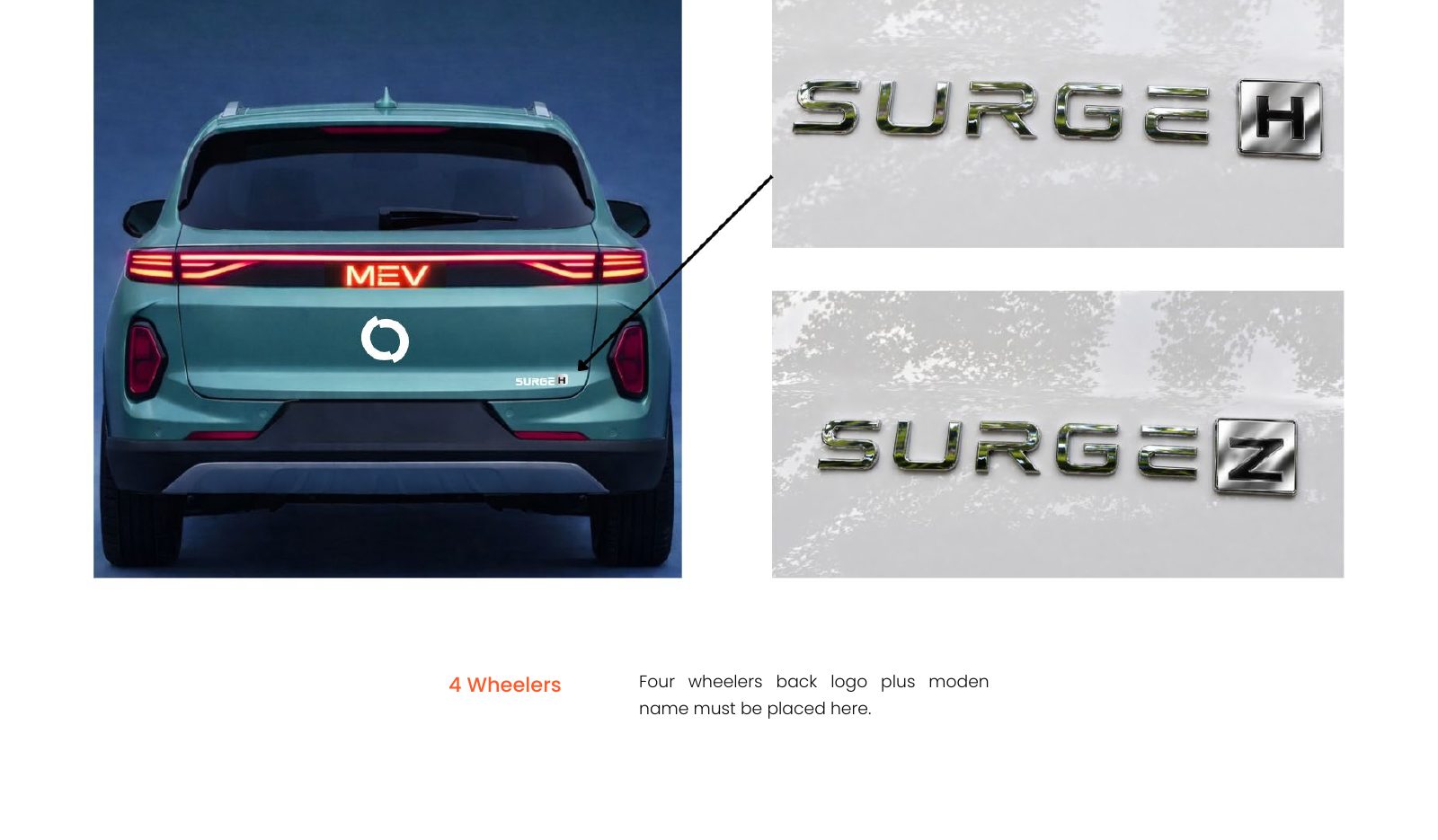
How do we keep the logo legible over travel photography?
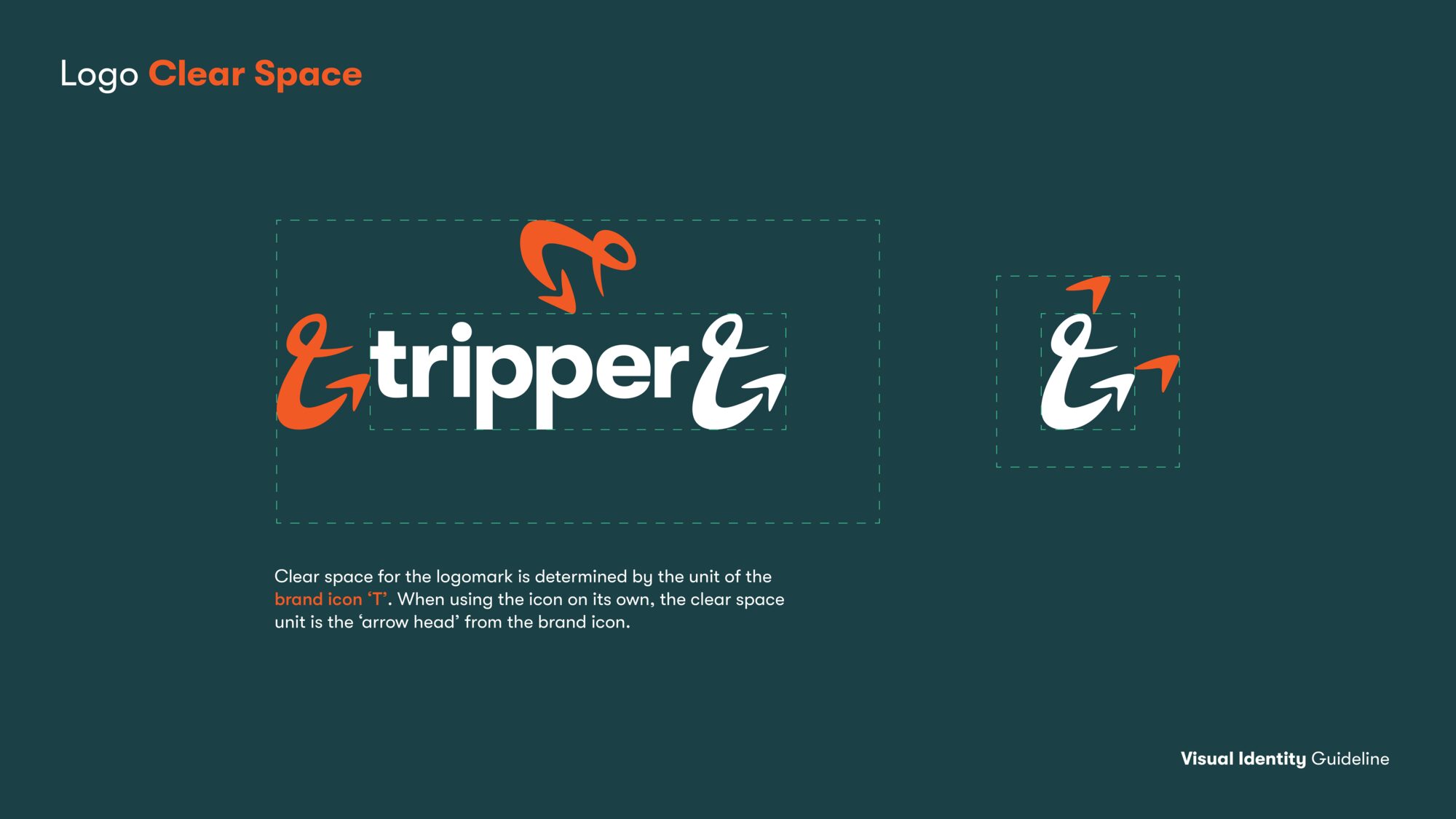
Tripper’s guide shows a single-colour logo over a travel image, with a subtle gradient to create separation from the photograph. For clear space, it uses the brand’s own T as the unit of measure. A designer can apply the same rule to the next destination image at a different size.
Explore Tripper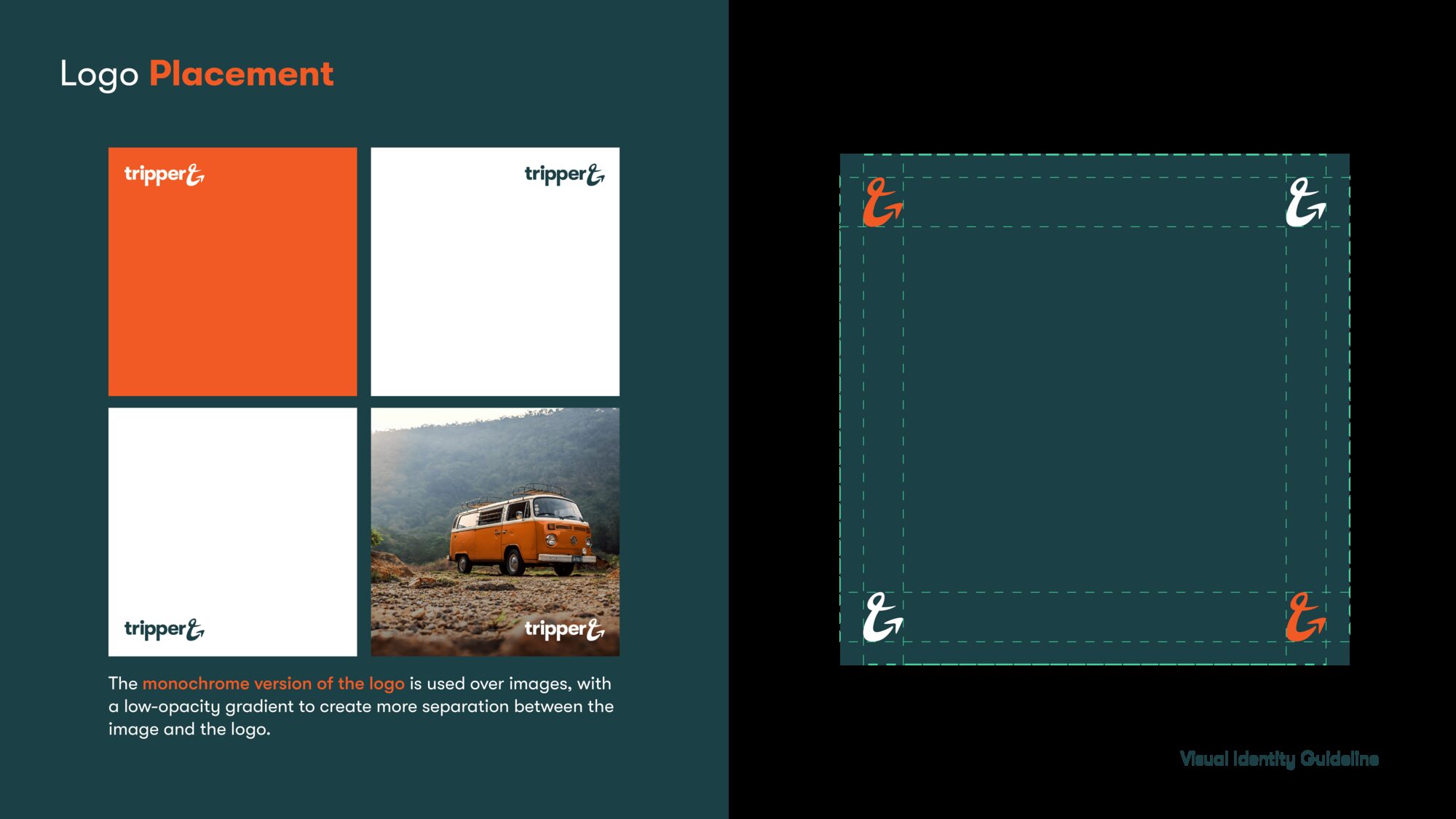
What can a supplier find on one page?
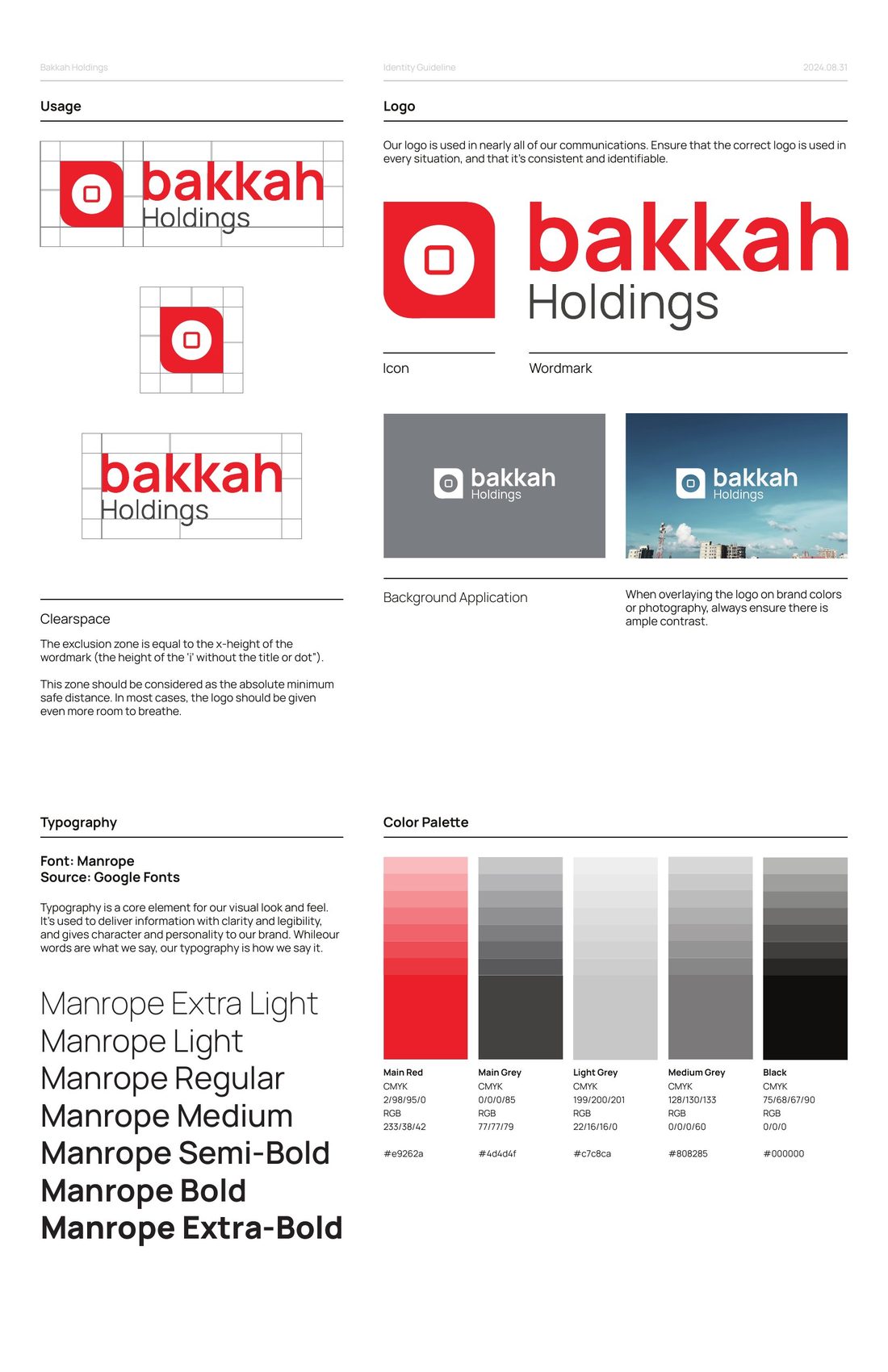
Bakkah’s single-sheet guide brings together the logo, colour specifications, Manrope type family and examples of the mark on different backgrounds. Even the clear-space rule has a reference built into the logo itself, using the height of the lowercase letters in the wordmark. It’s a sheet someone can send with an artwork file and refer to during production.
Explore Bakkah HoldingsHow do a café apron and a food post feel related?
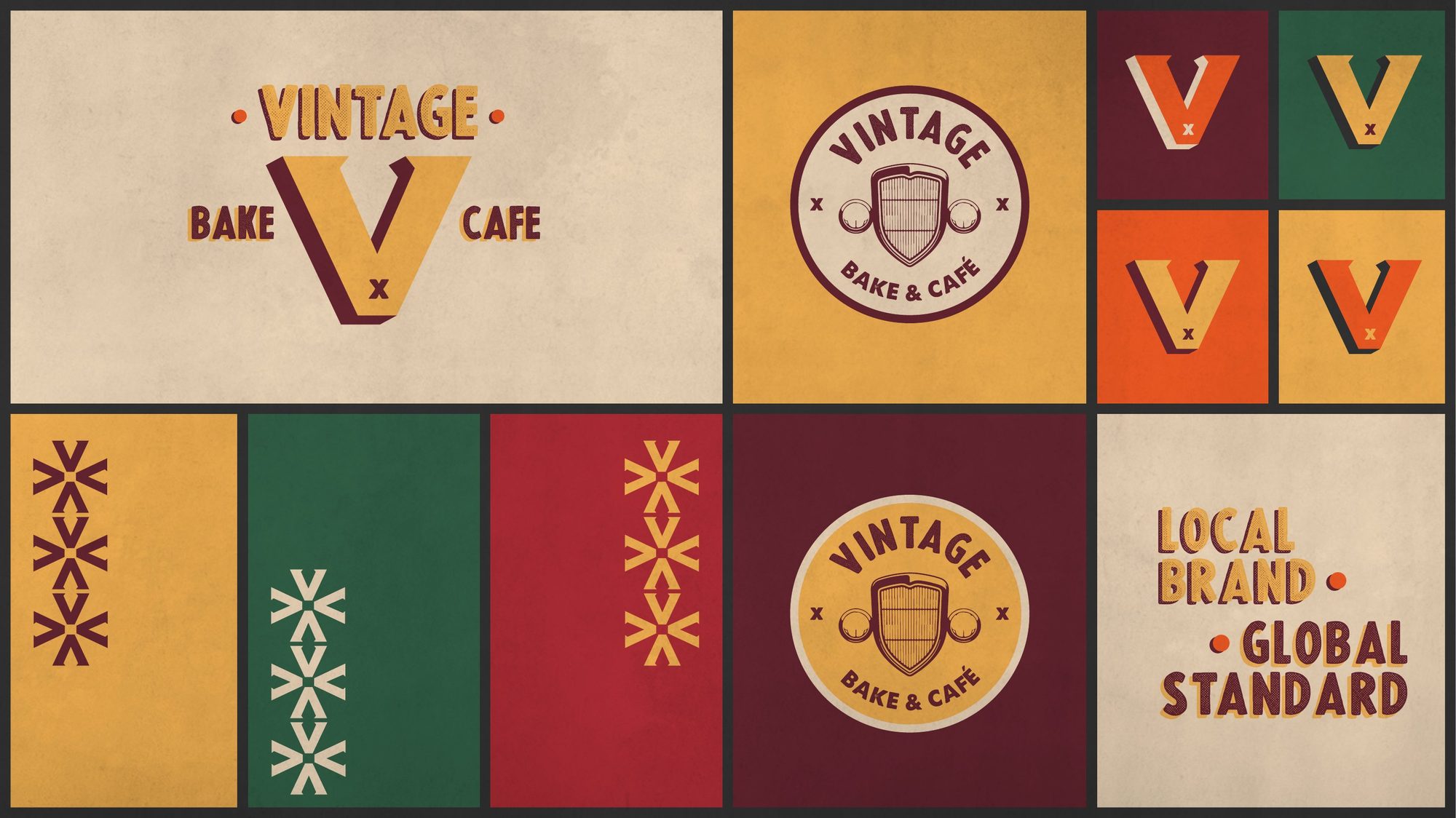
Vintage’s guide brings the primary badge, alternative mark and stamp into one family. Food photography, a repeating pattern and examples on an apron, a takeaway cup and a product post show how the café can vary the design from one surface to the next and still feel familiar.
Explore Vintage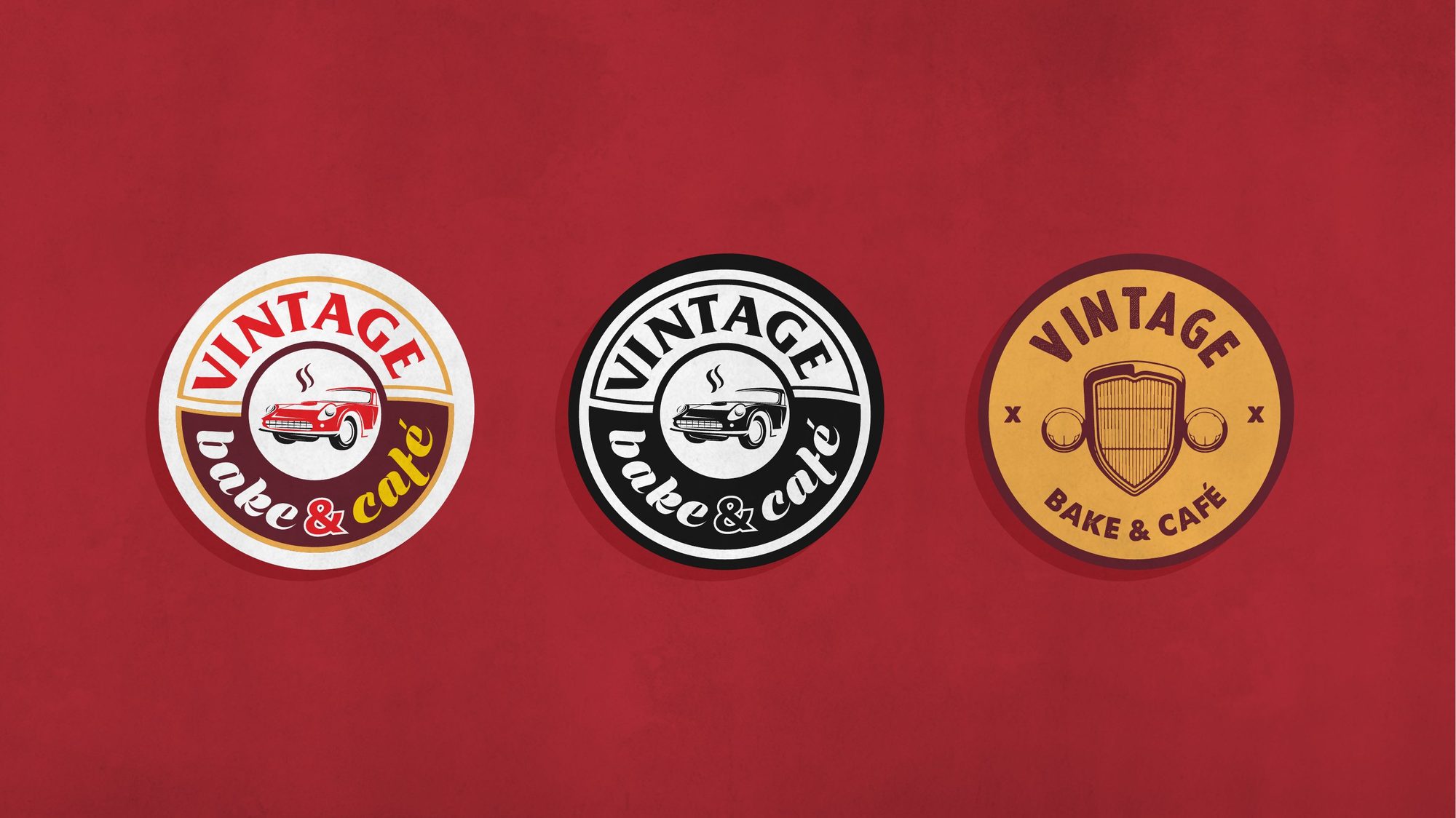
How we build your guide
- 1
Bring us the work your team makes.
We review the identity files alongside recent materials. A sales deck, a partner post and a printer’s proof often reveal which decisions people keep having to make from scratch. Together, we agree on the audiences and applications the guide needs to cover.
- 2
Review the rules in context.
We draft the guidance and apply it to a few representative pieces. You can judge a type hierarchy on a real page or a logo rule on a busy photograph, then approve the treatment before it runs through the guide.
- 3
Put the guide in someone else’s hands.
We work through a typical task with the people who will use it. If a designer still has to ask which version to send a partner, that page needs a clearer instruction or a better example.
What you leave with
- 01
A brand guide
Covering the agreed elements of your identity, organised around the tasks your team and partners perform.
- 02
Annotated applications
Showing how the rules work together on your priority materials.
- 03
A handover reference
Identifying the approved assets, their variants and when to use each.
- 04
Quick-reference sheets or reusable templates
Where your team has a recurring production need. We agree on these when we scope the work.
Common questions
Can you build guidelines around an identity we already have?
Yes. We start with your existing files and recent work. If two versions are in circulation, we bring them to you for a decision before documenting one as the standard.
How detailed should our guide be?
Start with who needs to use it and what they make. Bakkah’s core identity fits on a single sheet. MEV’s book also has to explain model naming and vehicle markings. The right length is the one that lets the people doing the work find the answers they need.
Can the guide cover language as well as design?
Yes. Where voice is part of the brief, we include audience guidance and worked copy examples. For a multilingual identity, we can also cover type choices and layouts in the scripts your team uses.
What determines timing and cost?
We review the state of your existing files, the number of applications and who needs to approve them. Once we know what the guide has to cover, we can give you a scope, fee and schedule.
What does your team keep asking about the brand?
Send us your current guidelines, if you have them, and two or three pieces your team produces regularly. A good place to start is the one that always comes back for another round of corrections.
Talk to TWC about your brand guidelines →