
An international buyer looking at a finished garment can judge its cut, handle the fabric, and test the stretch of a waistband. What’s harder to see is who made the fabric, developed the sample, or produced the elastic.
For Apex Holdings Limited, those details were central to what it could offer a buyer. The Wider Collective produced a corporate film and a series of industrial photographs to take buyers inside Apex’s textile and apparel operations in Bangladesh, for use at expos, buyer presentations and corporate events, and across Apex’s digital channels.
One group, many floors
Apex began exporting seafood in the 1980s and moved into clothing in 1998. Today its product range spans active and athleisure, intimates, swimwear, sleepwear, kidswear and babywear, made across several factories and supported by its own chemical plant.
The brief was to position Apex Holdings as the mother brand behind those businesses, facilities and people, in a film about five minutes long that a buyer could follow without a guide.
Telling the story through the garment
“Vertically integrated” describes how Apex operates. For the film, we wanted to show what that means for someone developing a product with them. We structured the script around the decisions that shape a garment, from the first design conversation through sampling, fabric development, and production.
The sample room gave that story a practical starting point. A team can explore a design in 3D, but a physical sample lets someone feel the fabric, check the fit, and decide what needs to change. From there, the film follows the work into knitting and dyeing, down to components as small as an elastic or a drawstring.
“We can take an idea, work through the fabric, the construction and the details, and stay very close to it all the way through to the finished garment.”From the director’s script
Filming at two scales
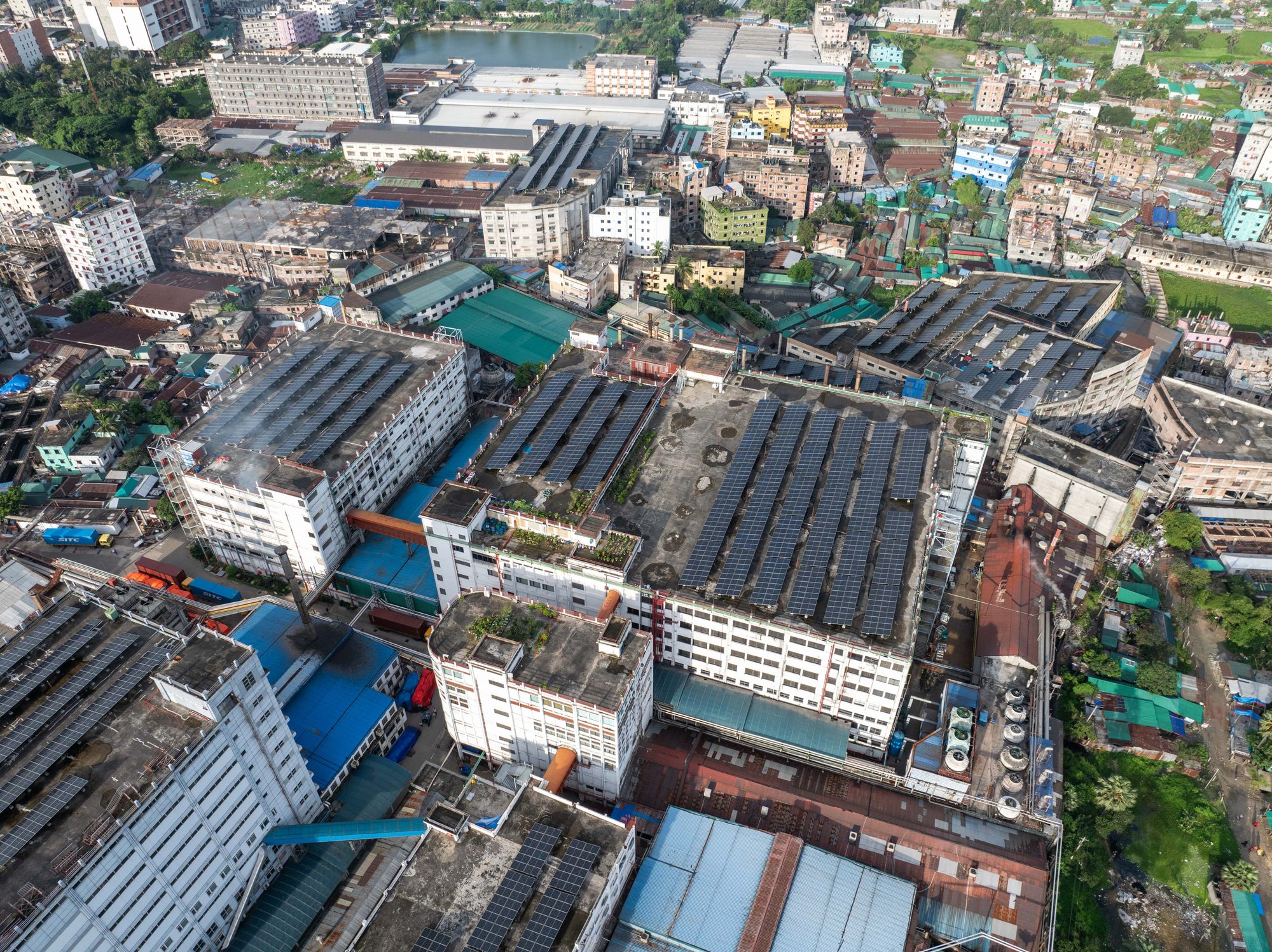
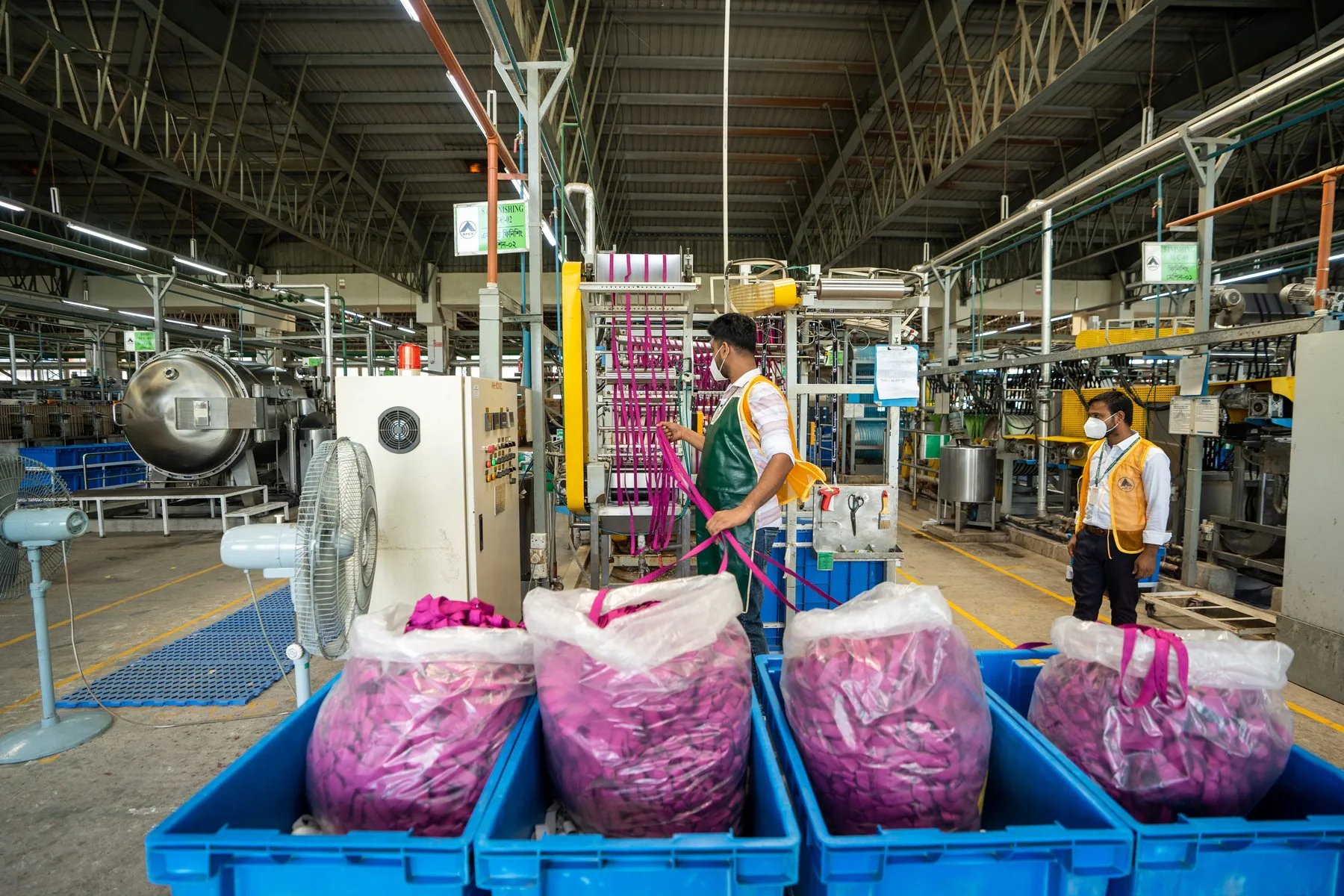
An aerial view establishes the size of the operation. On the manufacturing floor, a closer shot lets the viewer see a technician reaching into a knitting machine while colleagues follow the adjustment. Both views matter to a buyer: one shows the production capacity, the other shows the people responsible for it.
Over three shoot days we covered the Apex Holdings and Apex Fashion Wear factories, the Matex chemical plant, the water treatment facilities and the Gulshan head office, moving department by department from dyeing and warp knitting to foam-cup moulding, printing, embroidery, cutting, sewing and packing.
Nine collections, in 3D
To show the breadth of the range, the film includes 3D product animation for each category, in the order Apex asked for.
Scale and detail in a single frame
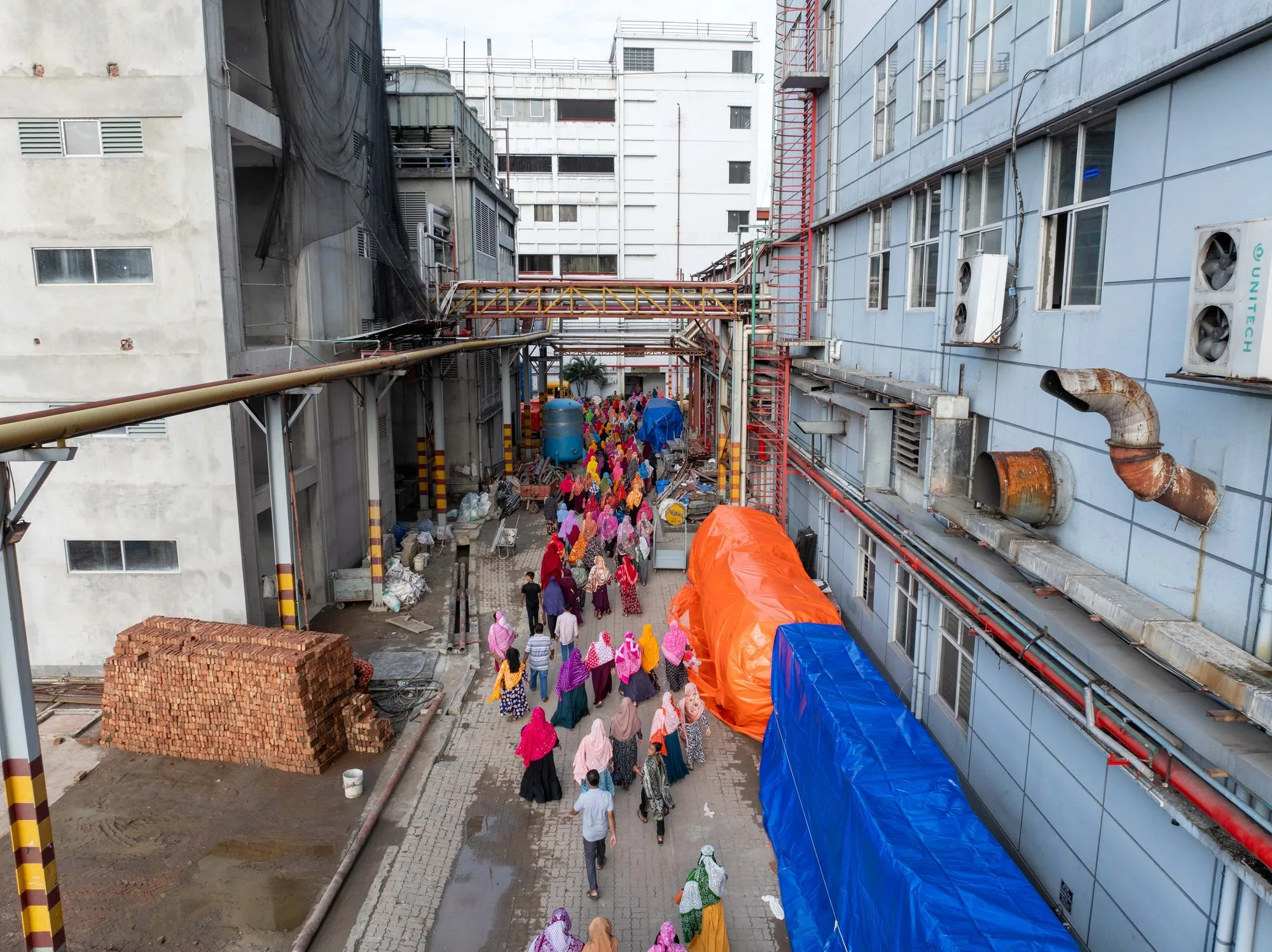
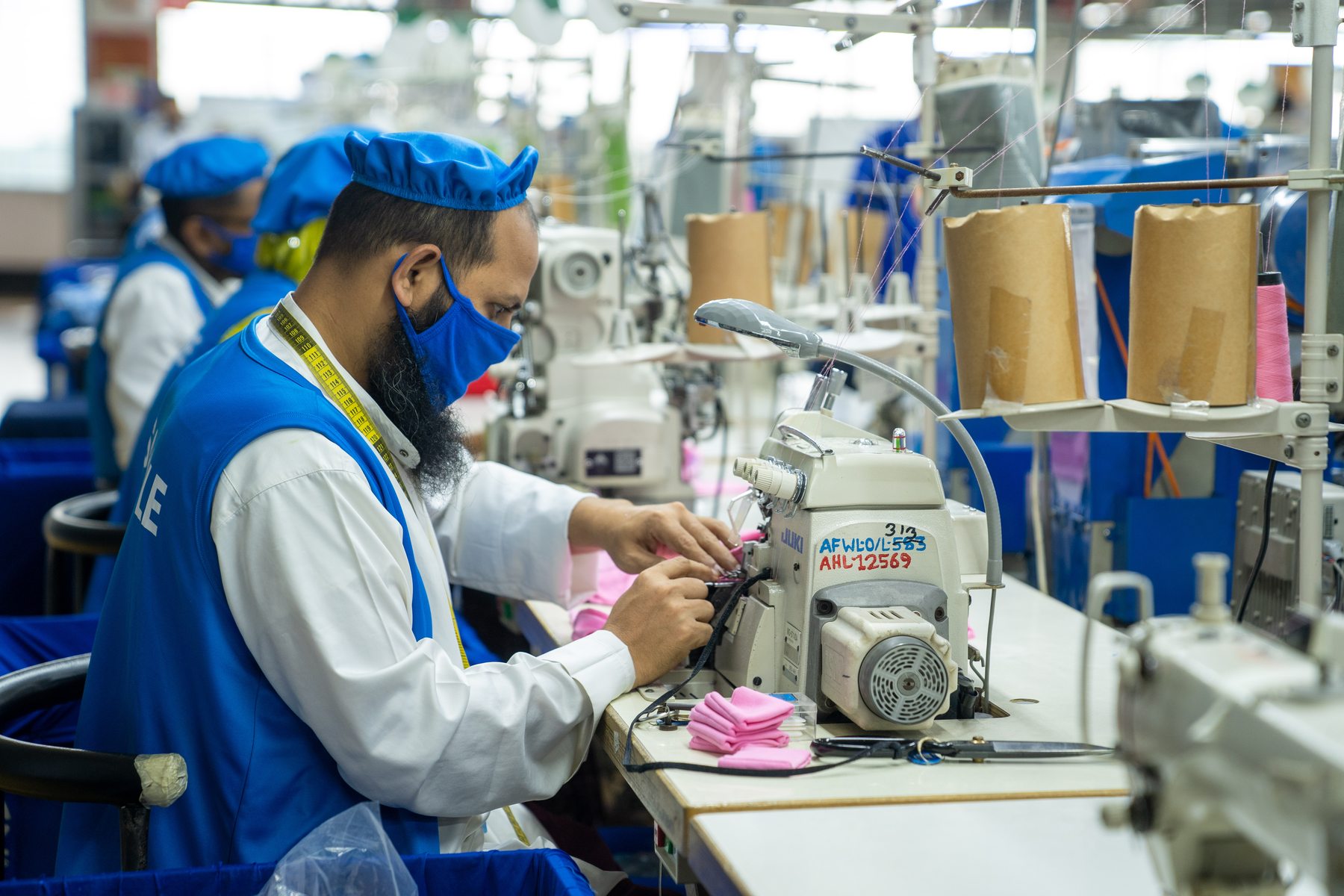
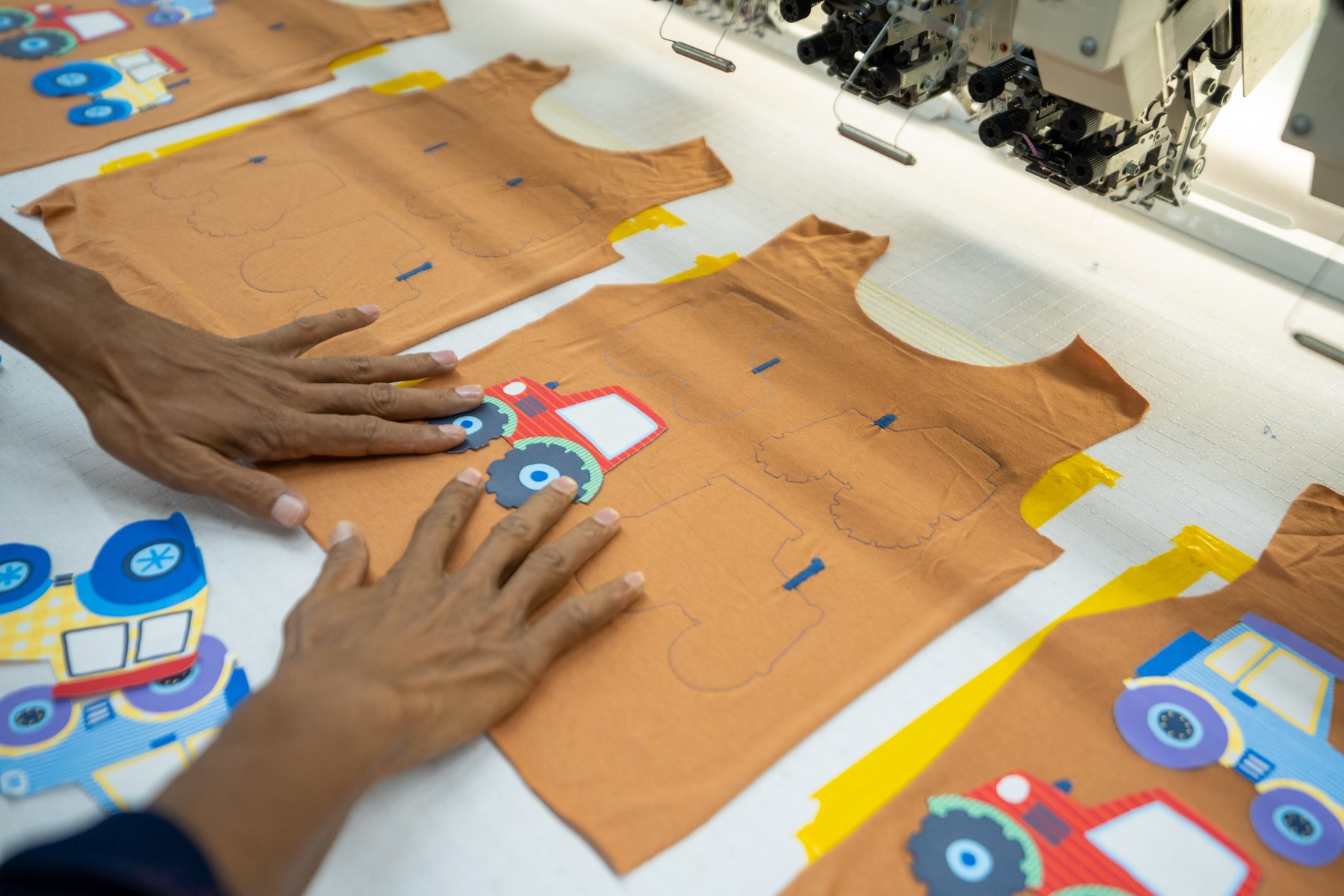
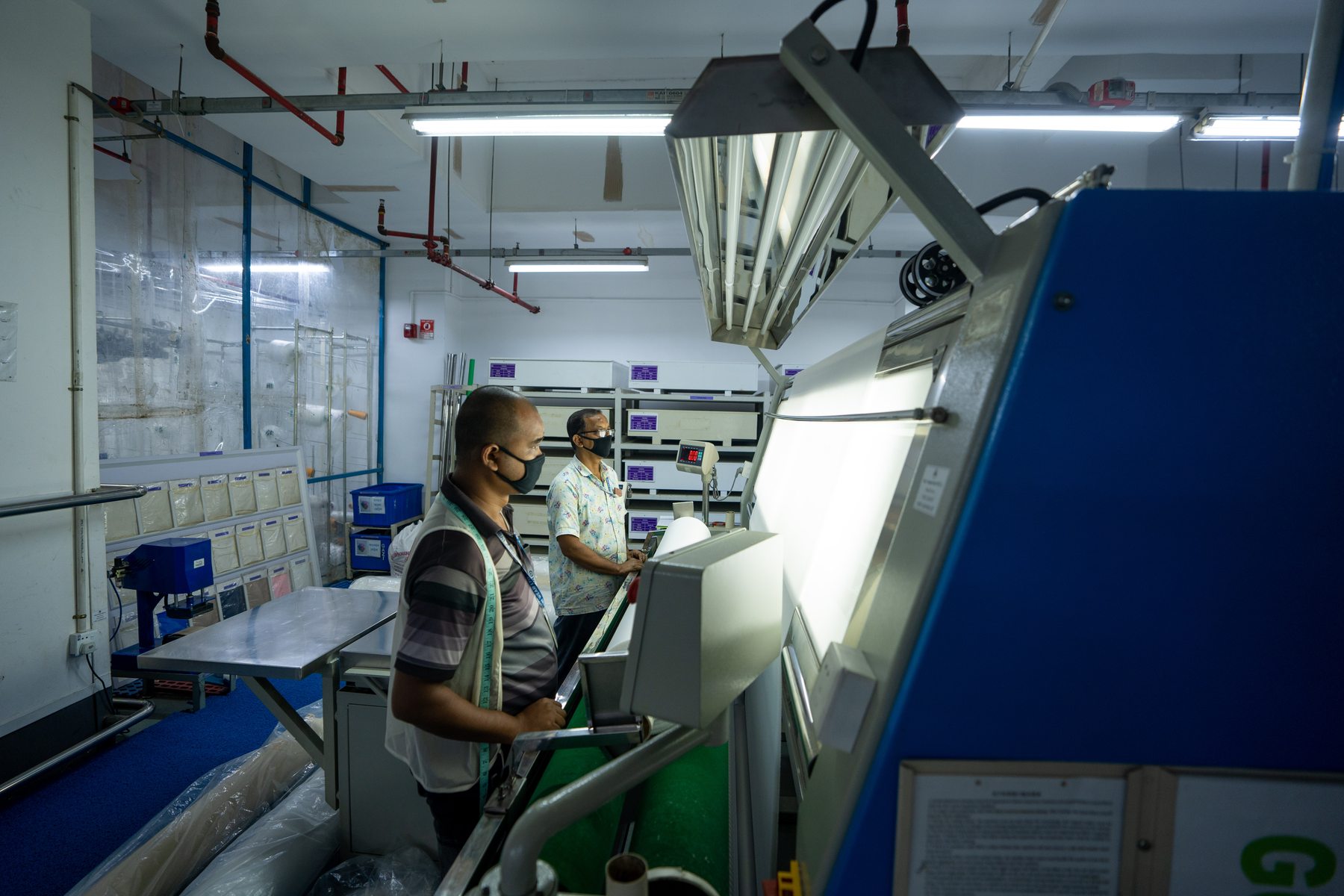
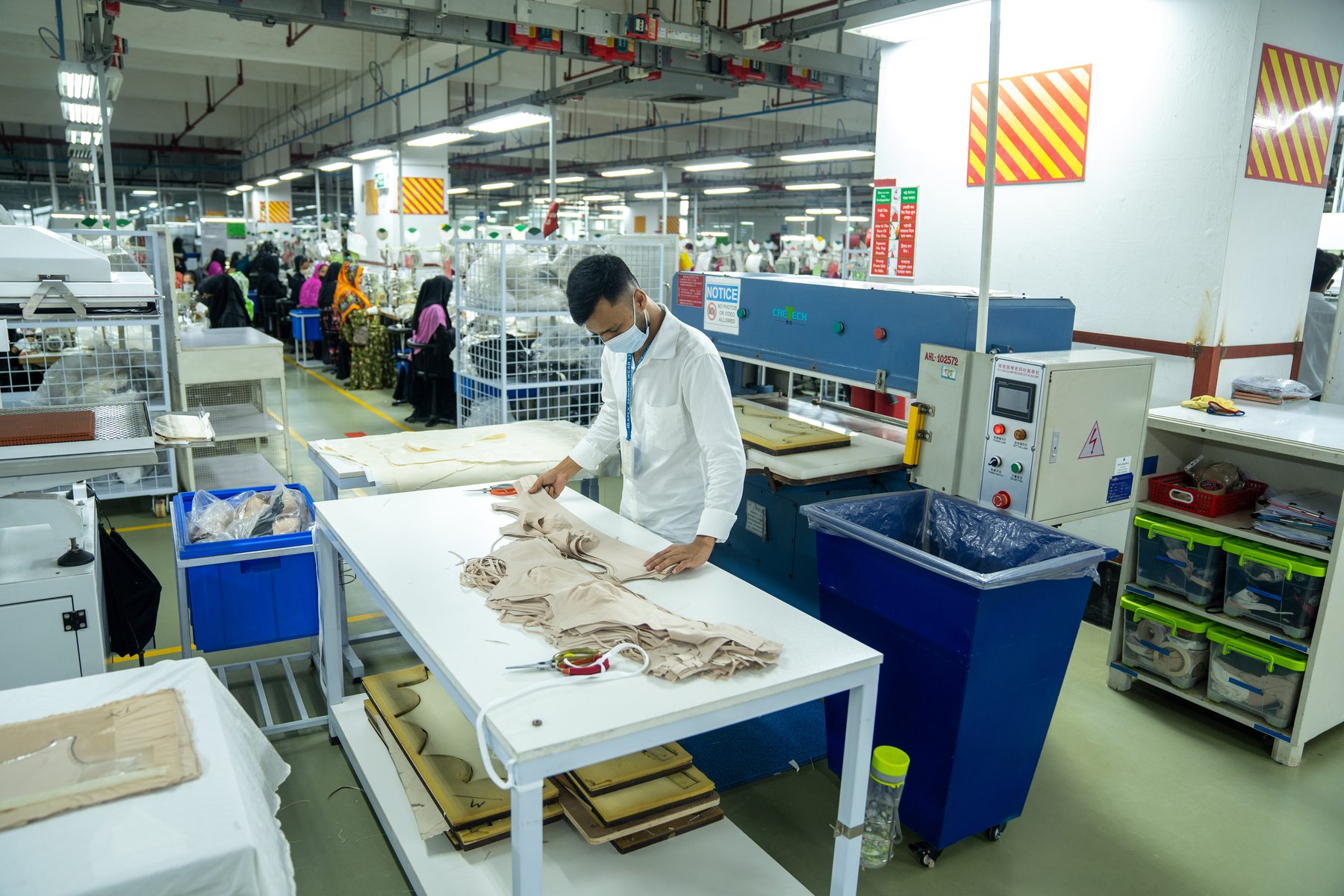
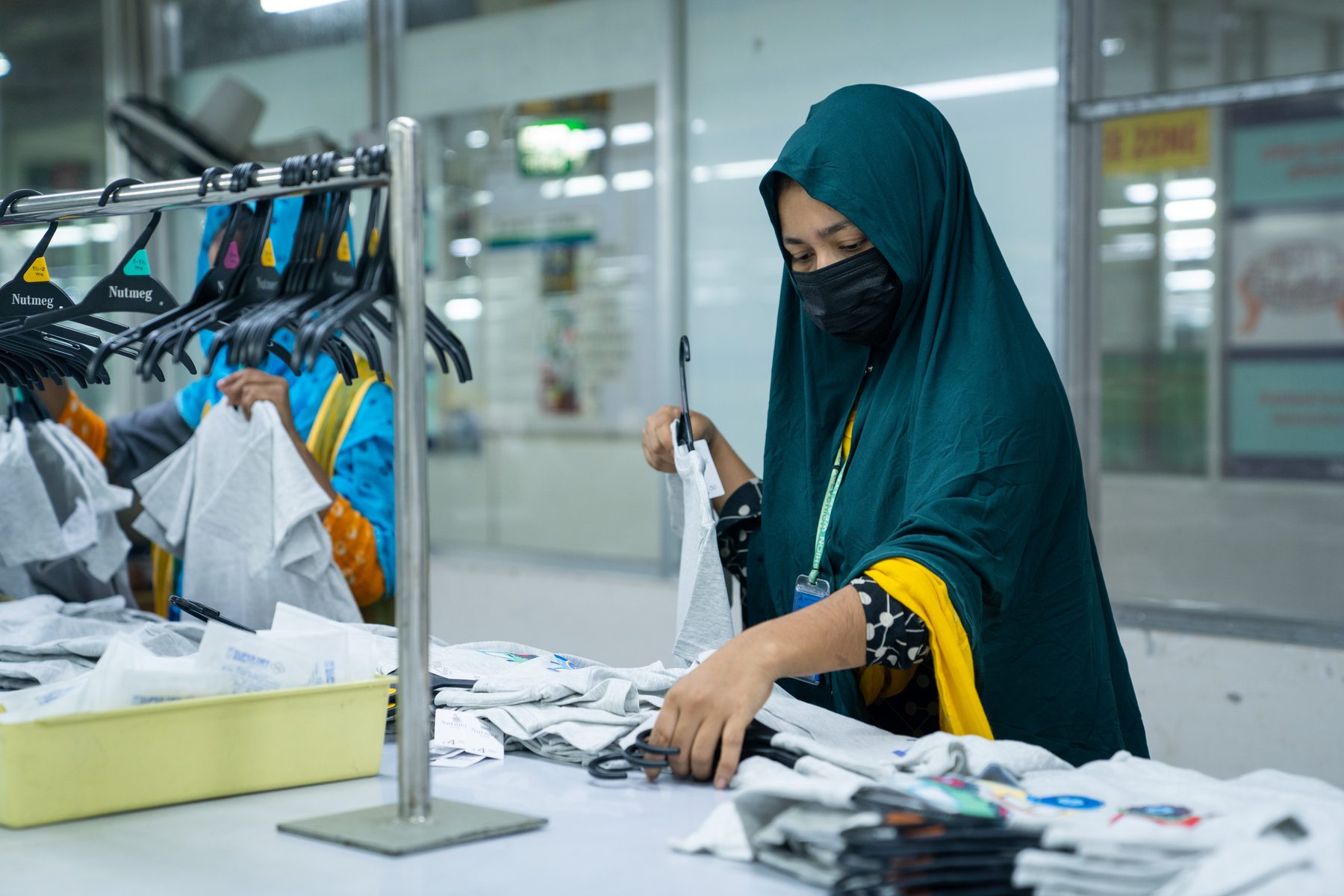
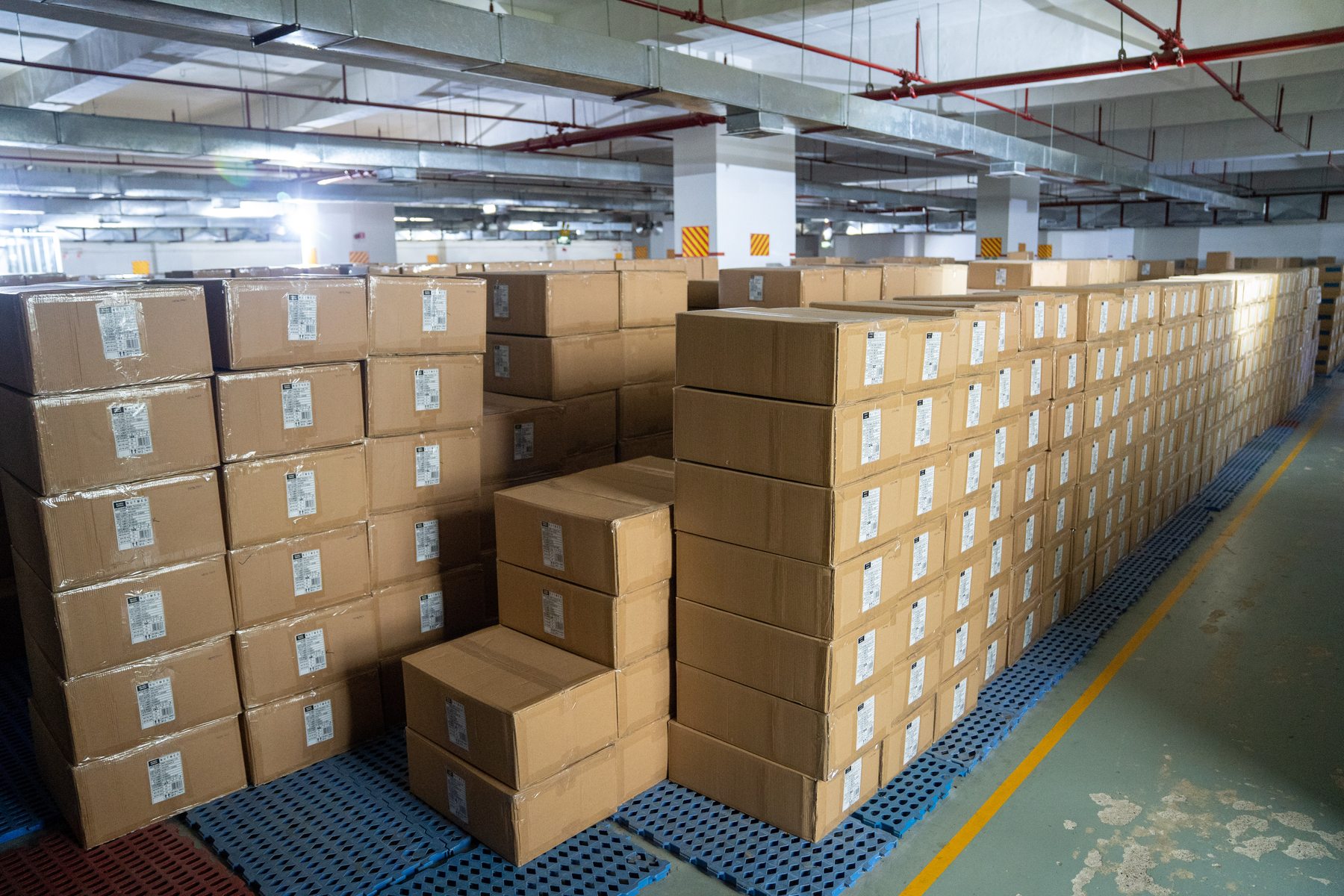
We carried that same approach into the industrial photography. Repetition across a long aisle or a production line gives a sense of scale, while the individual details make clear what each part of the factory handles.
The photographs give Apex a way to introduce a particular capability even when there’s no time to screen the whole film.
A factory introduction buyers can take with them
The finished film brings product development, manufacturing footage, and examples of the apparel into one subtitled introduction. A buyer can see finished kidswear, watch the equipment used to produce fabric, and hear how the teams work together.
By the end, a term like vertical integration has a concrete reference: the people, materials, and processes Apex can bring to the next product conversation.
- Studio
- The Wider Collective
- Director of photography
- Fayed
- Photography
- Rafftee